Solution-Focused Supervision Cards
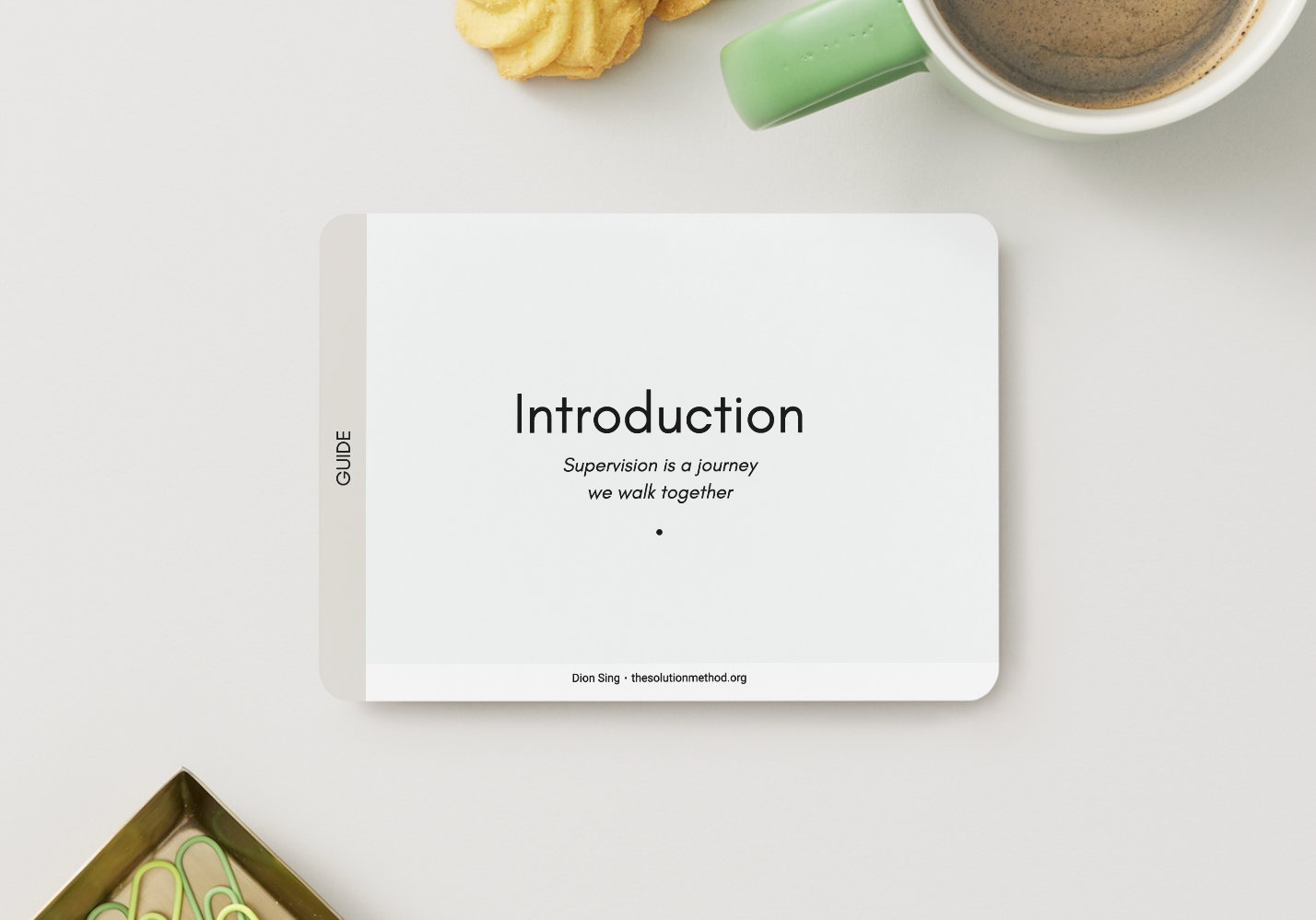
The Solution-Focused Supervision Cards are a practical companion for anyone leading supervision in community organisations. Each card carries ready to use questions and prompts, grouped into clear areas so you can reach for the right kind of conversation in the moment, whether you are exploring what is working, scaling, or drawing out signs of progress.
They are designed to sit alongside the Solution-Focused Supervision Handbook and Dion's workshops. On their own they are a strong prompt, but they come into their own when paired with the book or some training, which is what helps you get the most out of them. Used together, the ideas keep working long after the training room.
Built with Aboriginal Community Controlled Organisations in mind and useful in any supervision, the deck turns Solution-Focused practice into something you can hold in your hands and put to work straight away.

Feel good about leading supervision.
You care about the people you supervise. You want the conversation to go somewhere — not just tick a box, not just let people offload, but actually help them grow, feel supported and walk away ready for what's next.
The Supervision Prompt Card Deck gives you the questions to make that happen.
What ARe they
18 beautifully designed cards, spread on the table, picked up by either person in the room, and used to shape a supervision conversation that actually goes somewhere.
The deck covers the full shape of great supervision: opening the session, checking in, exploring what’s working and what’s hard, processing difficult experiences, and closing in a way that leaves people with something to carry forward.
Built on a Solution-Focused Approach, the cards are designed to help people find their own answers - not be told what to do. When supervision works like this, people don’t just feel heard. They walk out taller.
Who it’s for
The cards are designed for supervisor and supervisee together. But they were built with a particular person in mind: the line manager who cares deeply about their team and wants to lead supervision well, but isn’t always sure how to hold the conversation or where to take it.
If you’ve ever sat down for supervision and thought ‘I want this to be more than just a check-in’ - these cards are for you.
They are particularly well suited to the human services sector, and have been designed with Aboriginal Community Controlled Organisations in mind — including a dedicated Cultural Knowledge card that reflects the distinctive learning and practice that happens in ACCO workplaces.
What’s in the deck
The 18 cards are organised across five groups:
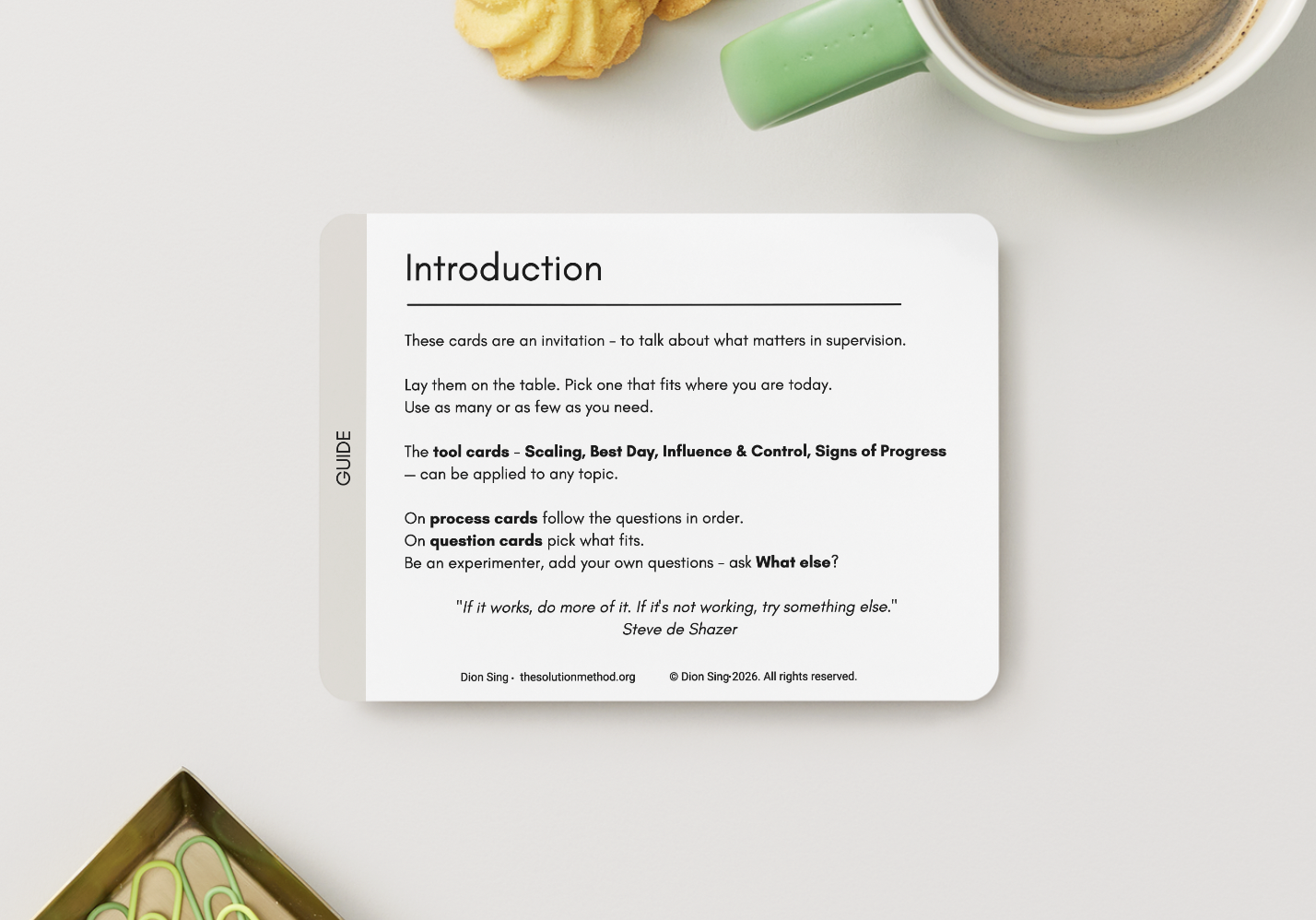
Guide cards (2): Introduction and For Supervisors — orient both people to how the cards work and offer the supervisor a set of craft principles to hold the space well.
Session cards (2): Setting Out and Wrapping Up — open and close the conversation with intention, making sure the session starts well and ends with something people can act on.
Check-in cards (3): Self Care, Cultural Knowledge, and Gratitude — create space at the beginning to acknowledge the whole person before diving into work topics.
Topic cards (7): Highlights & Strengths, Work & Progress, Challenges, Worries, Debriefing, Learning, and Future — the heart of the deck. Each card holds a different kind of conversation, from celebrating what’s going well to working through what’s hard.
Tool cards (4): Scaling, Best Day, Influence & Control, and Signs of Progress — powerful Solution-Focused tools that can be picked up alongside any topic at any point in the session.
Why it works
Most supervision conversations are well-meaning but unfocused. Someone offloads, the supervisor listens, and both walk away feeling like something important was said — but not much has changed.
The cards change that. They co-create the conversation — both people choose what goes on the table, both people engage with the questions, and the answers always come from the person being supervised. Not from the supervisor’s advice or opinion, but from the supervisee’s own knowledge, experience and resourcefulness.
This is supervision that builds people. It aligns with the educative, supportive and managerial functions described by Kadushin — the framework underpinning professional supervision standards across Australian human services — and reflects AASW Practice Standard 8, which embeds supervision as an expectation of good professional practice.
For ACCO workplaces, the deck also supports the sector’s commitment to workforce development, cultural safety and self-determination — grounding supervision in the strengths of the person in front of you rather than the deficits.
“If it works, do more of it. If it’s not working, try something else.” — Steve de Shazer